


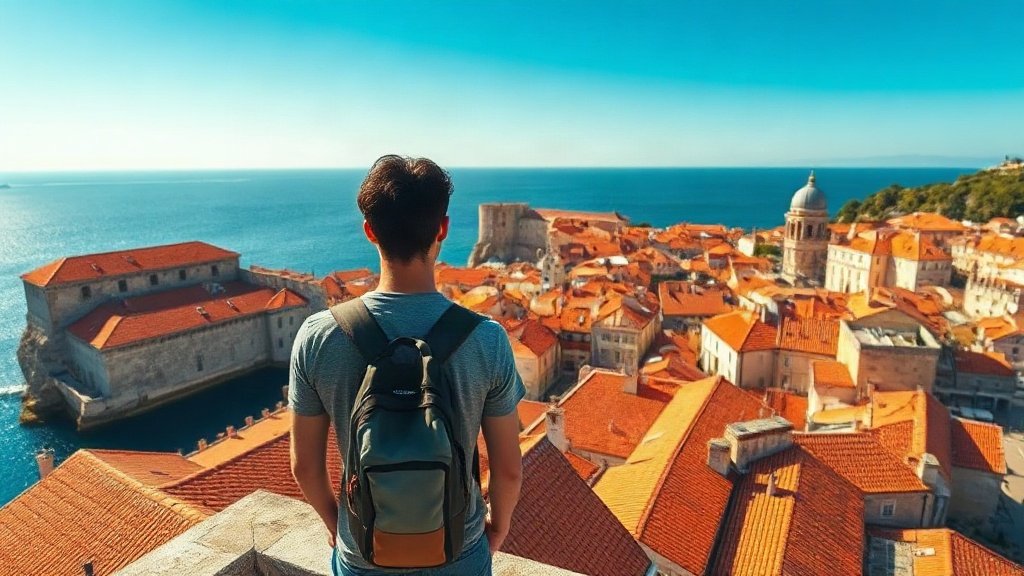
In short: the reality of overtourism in Dubrovnik
Surtourism in Dubrovnik refers to the saturation of an urban space reduced under the pressure of visitor flows exceeding its physical and social reception capacity. This phenomenon is characterized by a deterioration of the local living environment and a deterioration of the tourist experience at peak times.
- Demographic pressure: A record ratio of 27.42 tourists per permanent inhabitant recorded in the city.
- Depopulation of the center: The population of the old town rose from 5,000 inhabitants in 1991 to about 1,500 inhabitants.
- Reception ceiling: The theoretical maximum physical capacity is set at 11,275 simultaneous visitors in the fortified enclosure.
- Strict regulation: Limitation to 2 simultaneous cruise ships and 4,000 simultaneous cruise ships in the historic centre.
What is overtourism in Dubrovnik?
Surtourism is called in Dubrovnik the structural overshoot of the reception capacity of the fortified enclosure, where the flow of excursionists deteriorates local life and heritage. This imbalance results in a high ratio of 27.42 tourists per permanent inhabitant, while the historic center emptied of its residents, from 5,000 inhabitants in 1991 to approximately 1,500 inhabitants.
As early as 2016, UNESCO and Licomos issued a formal warning about the threat of loss of World Heritage status due to a lack of flow regulation. Faced with this alert, the municipality reacted by launching its overall flow management strategy called “Respect the City” in 2017 (poštujmo grad).
How does the city regulate cruise flows?
Cruise ships are the main lever for daytime congestion in the historic center. To remedy this, the city of Dubrovnik signed a strategic partnership in 2019 with the Cruise Lines International Association (CLIA), establishing a strict supervision of maritime traffic.
The port regulation rules set a very rigorous operational framework:
- Ship quota: A fixed limitation to a maximum of 2 simultaneous cruise ships at the dock or at anchor.
- Simultaneous quota in the old town: A maximum authorized ceiling of 4,000 cruise passengers present at the same time in the historic center.
- Daily ceiling: An operational objective capped at 4,500 cruise passengers per day throughout the municipal territory.
- Minimum stopover: An 8-hour minimum stay obligation at the dock for each liner in order to take off from visitors.
- Municipal tax: A municipal levy of €1.00 per landed cruise ship passenger.
To control these gauges, the municipality relies on a real-time counting device consisting of a network of 6 cameras positioned at the access doors of the old town, transferring their data with an update every 15 minutes. These surveys make it possible to maintain attendance below the alert threshold of the 11,275 simultaneous visitors established by the University of Dubrovnik.
What budget should you plan for with the Dubrovnik Pass to regulate your visit?
Access to the ramparts and main sites of the historic center is directly attached to the Dubrovnik Pass, a digital passport set up by the Dubrovnik Tourist Office to encourage individual planning of visits.
| Pass formula | Application period | Official rate per person |
|---|---|---|
| 1 day pass (high season) | from 01/03 to 31/10 | €40.00 |
| 1 day pass (low season) | from 01/11 to 28/02 | €20.00 |
| 3 days pass (high season) | from 01/03 to 31/10 | €50.00 |
| 7 days pass (high season) | from 01/03 to 31/10 | €60.00 |
The price difference between the high season and the low season (1 day pass from €40.00 to €20.00) aims to smooth out tourist activity over the whole year. Buying your ticket in advance prevents the queues from the stack door.
Which preserved areas to explore around Dubrovnik?
To relieve congestion on rue Stradun and the fortified ramparts, the municipal strategy promotes geographical dispersal areas located in the immediate vicinity of the urban center.
Two natural areas serve as a safety valve for tourist flows:
- Lokrum Island: Located ten minutes by boat from the old port, this protected nature reserve serves as a major preserve-relay area to disperse visitors to the green during the hottest hours of the day.
- The Elaphic Islands: This neighboring archipelago is promoted by the Tourist Office as an alternative island destination to redistribute the excursionist attendance outside the fortified perimeter.
Frequently Asked Questions about Overtourism in Dubrovnik
What is overtourism in Dubrovnik?
Surtourism in Dubrovnik refers to the saturation of the historic center under the pressure of a ratio of 27.42 tourists per inhabitant. This phenomenon caused the resident population to fall from 5,000 to 1,500 residents and led UNESCO to issue a warning in 2016.
What are the quotas imposed on cruise ships in Dubrovnik?
The city limits the reception to 2 simultaneous cruise ships, with a minimum stall duration of 8 hours. The number of cruise passengers is capped at 4,000 simultaneously in the old town and 4,500 passengers in total per day, supported by a tourist tax of €1.00 per passenger.
How much is the Dubrovnik Pass in high season?
According to the official rates of the Dubrovnik Tourist Office for the high season (March 1 to October 31), the Dubrovnik Pass costs €40.00 for 1 day, €50.00 for 3 days and 60.00 € for 7 days per person.
{“@context”:”https://schema.org”,”@graph”:[{“@type”:”Article”,”headline”:”Surtourisme à Dubrovnik : définition et 4 règles pour l’éviter”,”description”:”Comprendre le surtourisme à Dubrovnik : chiffres clés, quotas de croisières officiels et alternatives concrètes pour visiter la cité médiévale sans subir la foule.”,”datePublished”:”2026-10-21″,”dateModified”:”2026-10-21″,”inLanguage”:”fr”,”keywords”:”surtourisme, dubrovnik, definition”},{“@type”:”FAQPage”,”mainEntity”:[{“@type”:”Question”,”name”:”Qu’appelle-t-on le surtourisme à Dubrovnik ?”,”acceptedAnswer”:{“@type”:”Answer”,”text”:”Le surtourisme à Dubrovnik désigne la saturation du centre historique sous la pression d’un ratio de 27,42 touristes par habitant. Ce phénomène a provoqué la chute de la population résidente de la Vieille Ville de 5 000 à 1 500 habitants et a conduit l’UNESCO à émettre un avertissement dès 2016.”}},{“@type”:”Question”,”name”:”Quels sont les quotas imposés aux navires de croisière à Dubrovnik ?”,”acceptedAnswer”:{“@type”:”Answer”,”text”:”La ville limite l’accueil à 2 navires de croisière simultanés, avec une durée d’escale minimale de 8 heures. Le nombre de croisiéristes est plafonné à 4 000 personnes simultanément dans la Vieille Ville et à 4 500 passagers au total par jour, soutenus par une taxe de séjour de 1,00 € par passager.”}},{“@type”:”Question”,”name”:”Combien coûte le Dubrovnik Pass en haute saison ?”,”acceptedAnswer”:{“@type”:”Answer”,”text”:”Selon les tarifs officiels de l’Office du Tourisme de Dubrovnik pour la saison haute (du 1er mars au 31 octobre), le Dubrovnik Pass coûte 40,00 € pour 1 jour, 50,00 € pour 3 jours et 60,00 € pour 7 jours par personne.”}}]}]}
