


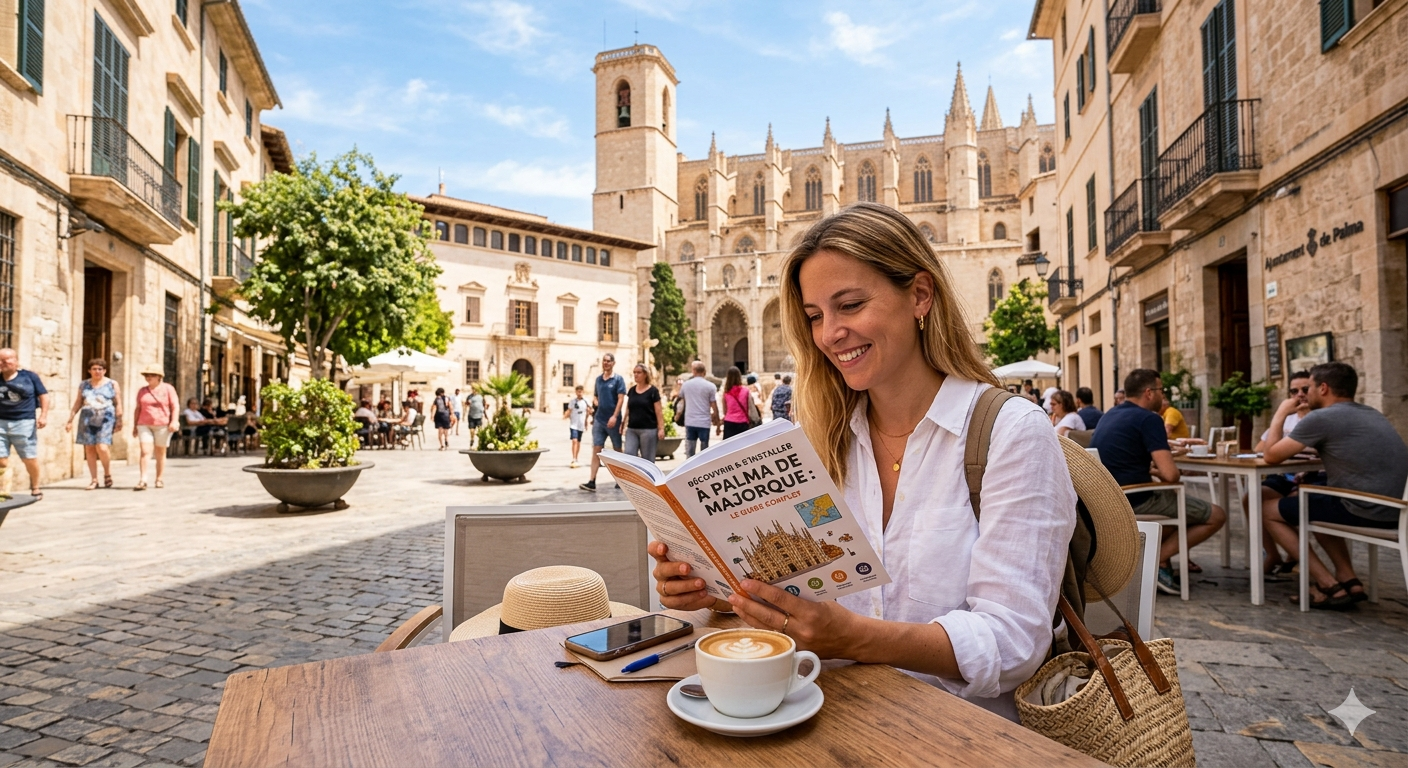
Is Palma de Mallorca really the ideal destination for those who dream of sun, sea and a balanced life between Mediterranean sweetness and urban dynamism?
The Balearic capital attracts thousands of expatriates, teleworkers and retirees every year seduced by its exceptional climate, its cultural richness and its quality of life difficult to match.
But settling there requires serious preparation and a good knowledge of the city.
Here is everything you need to know to succeed in your installation in Palma de Mallorca.
A city with many faces
Palma de Mallorca is not a simple seaside resort.
It is a real regional capital of more than 400,000 inhabitants, with a listed medieval old town, a spectacular Gothic cathedral overlooking the bay, leading museums and a gastronomic scene recognized at the level international.
The city offers full urban life, with shops, universities, modern hospitals and efficient transport infrastructure, while being just minutes from the most beautiful beaches in the Mediterranean.
It is this rare combination between quality of urban life and exceptional natural setting that explains the growing attractiveness of Palma among Europeans in search of a new start.
Climate, Palma’s first asset
The climate of Majorca is one of the most pleasant in Europe, with more than 300 days of sunshine per year and mild winters that allow you to enjoy the terraces and outdoor activities practically all year round.
The summers are warm and sunny, with temperatures that fluctuate between 28 and 35 degrees, tempered by the sea breeze which makes the heat bearable even in July and August.
The autumns are long and bright, often considered the best season to visit the island or start a new life there.
Winters are cool but rarely harsh, with temperatures that rarely drop below 10 degrees at night, which contrasts radically with the climate of northern Europe.
This exceptional climate has a direct impact on health, morale and quality of life on a daily basis, which many expatriates cite as the first reason for their installation in Mallorca.
The districts of Palma to know
Palma is a city with very contrasting neighborhoods, each with its own identity and attractions.
The historic center, called Casco Antiguo, is the city’s cultural and touristic heart, with its cobbled streets, Renaissance palaces and many trendy restaurants and bars.
It is a very popular area but also one of the most expensive, where renovated old accommodation reaches very high prices for purchase and rental.
The once popular and trendy Santa Catalina district has become the nerve center of Palma’s nightlife and gastronomic life, with its covered market and unmissable addresses.
El Terreno and Génova are quieter residential areas, appreciated by families and expatriates who are looking for a quiet living environment near the sea.
Further east, the Portixol district and its surroundings offer a very pleasant fishing village atmosphere, with a sea promenade and a renovated marina very popular with sailing enthusiasts.
Accommodation in Palma: budget and market realities
If you are looking to find accommodation In Palma de Mallorca, it is important to anticipate a real estate market under strong pressure, where demand greatly exceeds available supply, particularly for long-term rentals.
Prices have risen sharply in recent years under the combined effect of mass tourism, the influx of foreign teleworkers and real estate speculation.
A one-bedroom apartment in the center or in the trendy districts is rented between 900 and 1
Families looking for more spacious accommodation will have to plan between 1500 and 2500 euros per month for a three-bedroom apartment in a good neighborhood.
Peripheral areas such as Son Sardina, Establishments or the neighboring towns of Marratxí and Llucmajor offer more affordable alternatives, with good road connections to the center of Palma.
It is advisable to start the search several months before the scheduled installation date and to be accompanied by a local real estate agency that knows the market well.
Administrative procedures to set up
Moving to Palma de Mallorca as a European national is relatively simple administratively, thanks to freedom of movement within the European Union.
The first step to take is the registration in the register of foreign residents of the European Union, called NIE (Número de Identification of Extranjero), essential for opening a bank account, signing a rental contract or working legally in Spain.
This is done with the police station or the Spanish consulate, by appointment, by presenting a valid passport and proof of resources or professional activity.
Enrollment in the municipal registry (Empadronamiento) is another important formality that opens access to local public services, in particular health and education.
For non-European nationals, the procedures are more complex and require obtaining a residence visa adapted to the personal situation.
Working and living in Palma on a daily basis
the labor market palma is largely dominated by the tourism and hotel sector, but the city is also hosting a growing number of companies in the digital, finance and business services sectors.
Many expatriates choose PALMA as a basis for carrying out their teleworking activity or as self-employed, attracted by the living environment and the relatively advantageous Spanish taxation for certain profiles.
The cost of living in Palma is generally lower than that of the major capitals of Northern Europe, with the exception of housing, which remains the main item of expenditure.
Food, transport, outings and daily services are much cheaper than in Paris, London or Amsterdam, which partly compensates for the pressure on rent.
Public transport is well developed in the city, with a bus network and A light metro which connects the center to the university campus and some outlying districts.
Cultural and social life in Palma
Palma is a culturally lively city, with a rich artistic and cultural program throughout the year.
The Fundació Pilar I Joan Miró, The Es Baluard Museum of modern and contemporary art and the Palau March are all cultural institutions that make the city shine well beyond its borders.
The expatriate community is very active and well organized, with many associations, dating groups and regular events that facilitate the integration of newcomers.
Spanish is the official language, but Catalan (or Mallorquín in its local variant) is also very present in daily life, administrations and public display.
Learning some basics of Spanish before arriving is strongly recommended to facilitate administrative procedures and forge links with the local population.
